2026, week one
Still time to read, but for how long?

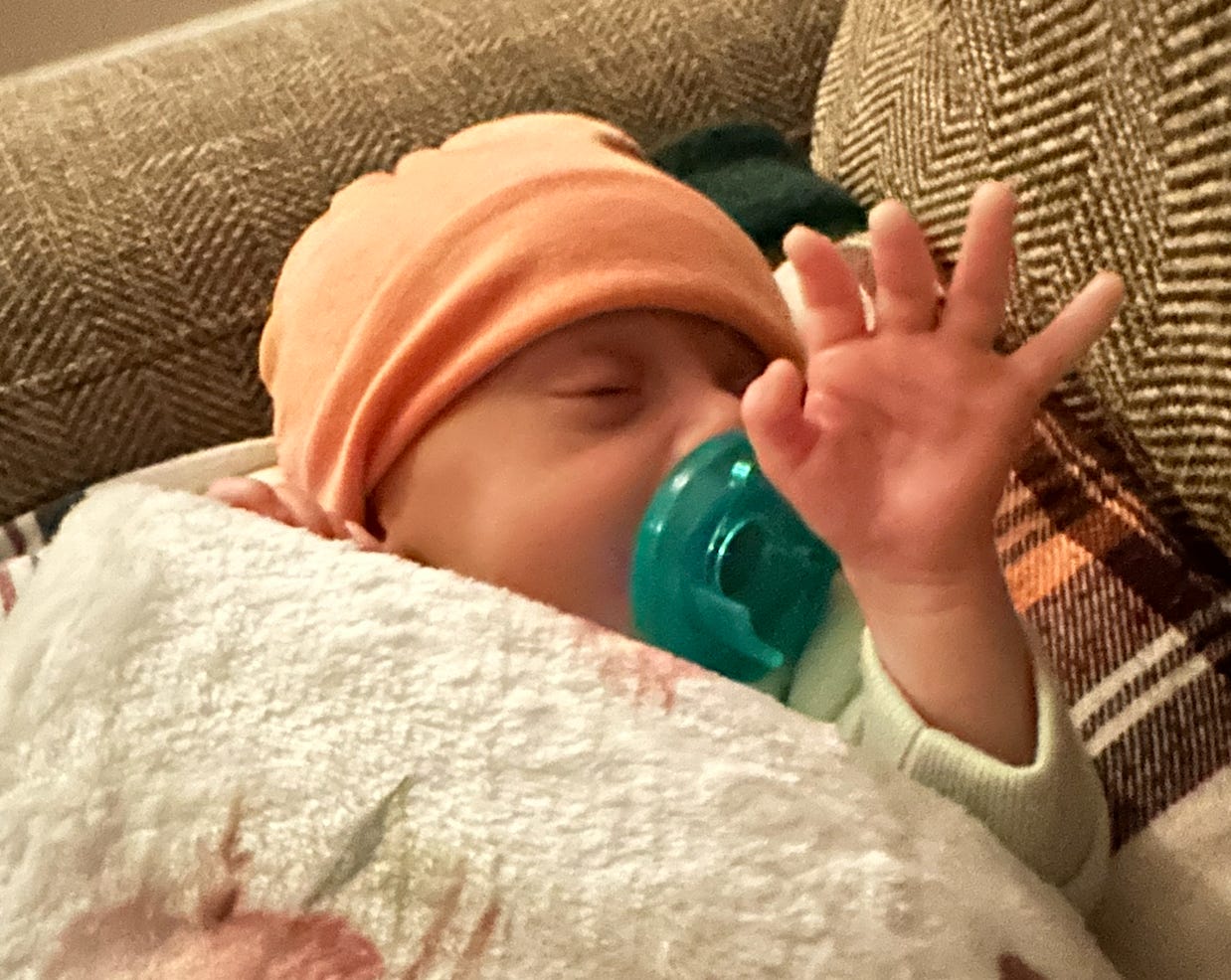
(Photo by me)
Before the kid got here, when people would say kind, ominous things about the end of my personal time and sleep cycle, I’d say: Hey, reporting is pretty good training for waking up at 4 a.m. and being interrupted every 20 minutes. This was a joke, one I used to steer the conversation to something else, like how good “American Pastoral” is or how the transformation of the GOP into a Euro-style nationalist party can’t be complete until it makes the deportations-for-free health care trade, a winner wherever it’s tried.
But the joke wasn’t wrong. I’m not going to get hubristic and talk about how easy it is to raise a kid (with her mom, in a house that doesn’t feel crowded, with enough money to not worry about changing diapers three times in 10 minutes). It is pretty easy to wake up at 4 a.m., something I’d done for a decade if I needed to catch the day’s first flight or talk coherently on morning TV. It’s not that hard to eat dinner or write something with frequent disruptions.
On leave, I want to finish another writing project (I’m on track) and write a weekly journal again (here it is), and it’s more doable than not. Have I occasionally, pathetically, been slow to action on a baby chore because I said, out loud, “I need to finish a sentence?” Sure. But mom’s job here is harder than mine, and over many years I’ve learned not to whine about disruptions.
Life, on leave, is simple. Travel is a walk with a stroller, a trip to get groceries, or a visit to the pediatrician — all smooth so far. Not wanting to pass on my old content-junkie habits, time downstairs, with the TV on and the kid in the room, means music. Bach’s usually safe. Minimalism is risky. I put on “Rothko Chapel” one day, expecting it to lull everyone in the room, and found that, for other people, it induces a low and intolerable level of anxiety. That feels wrong, but I’m not ready to argue about it with the kid.
I did have time to read, and to listen to books, with one headphone in one ear. For the reads section of the diary, I’ll denote audiobooks with italics.
Books finished
Stephen King, “Pet Sematary”
Virgil, “The Aeneid” (Robert Hughes translation)
Junji Ito, “Moan”
Douglas Murray, “The War on the West”
Ernst Jünger, “Storm of Steel” (Michael Hofmann translation)
Right, that’s a lot for the start of the year. Anyone who gamifies his/her reading knows the trick: Get most of the way through something after Christmas and polish it off in January. That was the story of “Pet Sematary,” a Halloween read I had put down while juggling Christmas responsibilities (hosting, tree, cooking a ham, ordering food, putting the ordered food on table, wrapping presents, telling other people to wrap them). It’ll be my last King for a while. His ability to draw the reader in with banal life details, product names, and inner monologues is impressive. The movie adaptation threw me as a kid; my friend Phil and I couldn’t even watch the scenes with Zelda, the spinal meningitis-afflicted sister, which made her up like a starved ghoul. The Gage family’s internal monologues are much more effective on the page, too. But I prefer King, and most other horror, in the form of one-sitting short stories.
Junji Ito’s new collection delivered that, with his usual gross-out horror and one of his strongest images in years: Vampirism that makes “blood fruit” emerge on limbs from victims’ necks. This was good pulp, hitting me at a different register than “Storm of Steel,” Jünger’s faithful account of what he saw as a soldier who survived the Great War on the German side.
Leaving out trifles such as ricochets and grazes, I was hit at least fourteen times, these being five bullets, two shell splinters, one shrapnel ball, four hand-grenade splinters and two bullet splinters, which, with entry and exit wounds, left me an even twenty scars. In the course of this war, where so much of the firing was done blindly into empty space, I still managed to get myself targeted no fewer than eleven times.
I’m afraid I did not get everything “The Aeneid” offered in my listen, a long and unabridged narration by Simon Callow — probably the most intellectual British ham actor. My fault, not his. I listened to this masterpiece in chunks, sometimes during extremely banal errands, sometimes on long drives where my mind got snatched away by a reckless driver. The “golden bough” section in the Underworld froze me in place. Little else did. I have a copy of this in print, and will re-read it when I get more time.
Murray’s book was a bit of a time warp, from a point in the Woke Wars when it wasn’t quite clear which side would win. It’s best when he is passionate about a culture war and its history, like the fight to save Rex Whistler’s mural at Tate Britain. The bits where he weighed in on idiotic TV segments or online debates, late and with all the right jokes, were less compelling. No regrets about listening to it; Murray’s polemic style works better in hot media than cold print.
I didn’t watch much, and left the TV over to my wife most nights. She had a yearning to watch all of Daniel Craig’s James Bond films, having only seen “Skyfall” and “Spectre.” A marathon reminded me of just how good “Casino Royale” was. Martin Campbell, a Master of Mid who has mostly directed crud since leaving the Bond films, delivered probably the best opening sequence for any of them (the Africa parkour chase and embassy fight), the most believable romance, and a plot unburdened by the lore piled on once he left the series. The waste of Christoph Walz, who spends the end of “Spectre” sitting in a helicopter then crawling on the Westminster Bridge, was worse than I remembered. Bond movies have a competitive advantage: Big budgets that allow the action and romance to take place in real settings, anywhere. You don’t need money to reboot old characters with new, hot actors.
For myself, I finally saw Jim Jarmusch’s “Permanent Vacation,” with compelling imagery of bankruptcy-era New York, some okay poetry, and not much of a plot; and “Breaking the Waves,” which I was not desensitized enough to enjoy 30 years ago, but definitely am now. All of this while putting a real estate deal to bed — not interesting enough to explain, but be happy for me that it’s over. This week, I need to plow through 9-10,000 words of other writing, and by saying “I’m not worried about that” here and out loud, I have convinced myself that I’m not worried about it.
One more link, the most convincing piece of writing I read outside a book all week: Jay Caspian Kang on the passing of the tabloid baton from TV news to pro-White House influencers. Enjoy that, I’ll be back to discuss.
congrats brother
I never got Rothko, personally, but lots of people I know did, so ... respect.